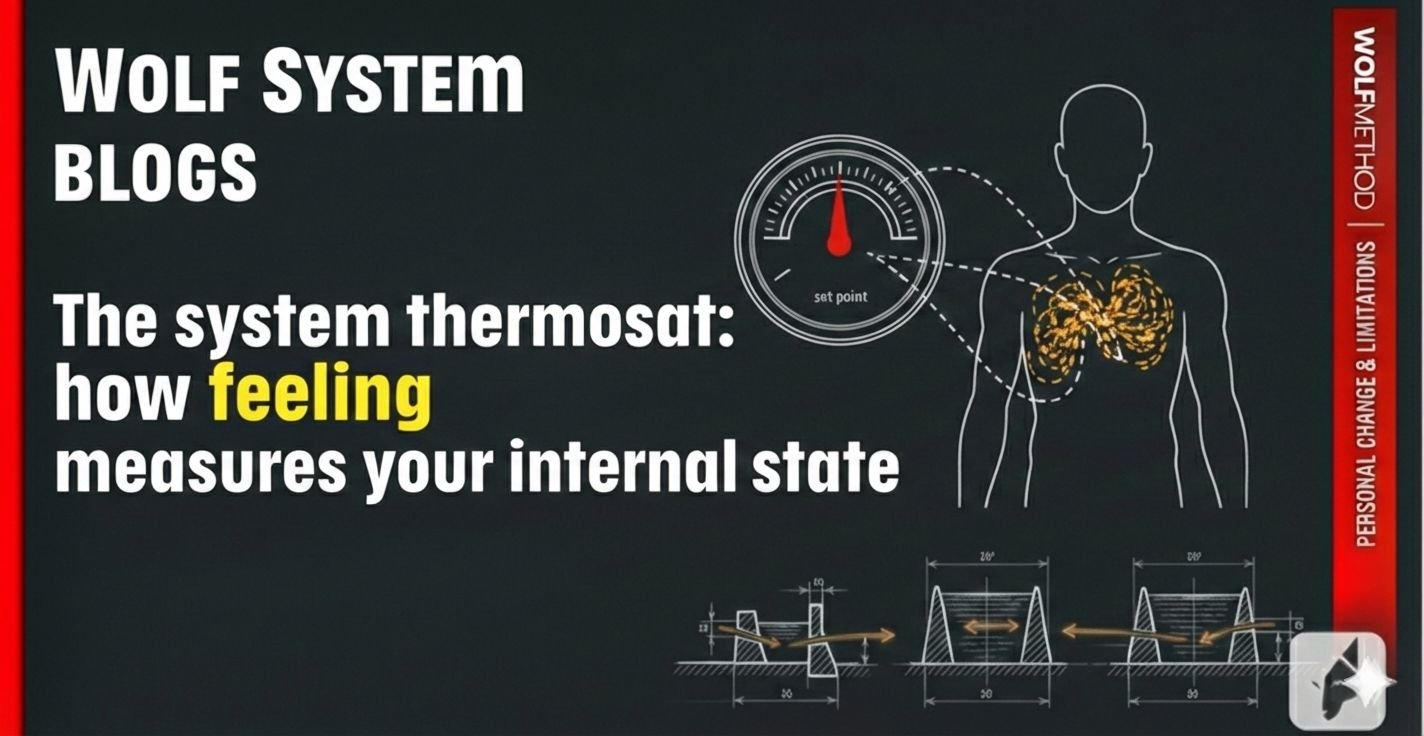
In the previous post (Chapter 2.2 – Feeling as a Signal), we explored how feeling acts as the signal guiding your system.
But a deeper question remains.
Where do those signals come from when we’re not reacting to the present moment?
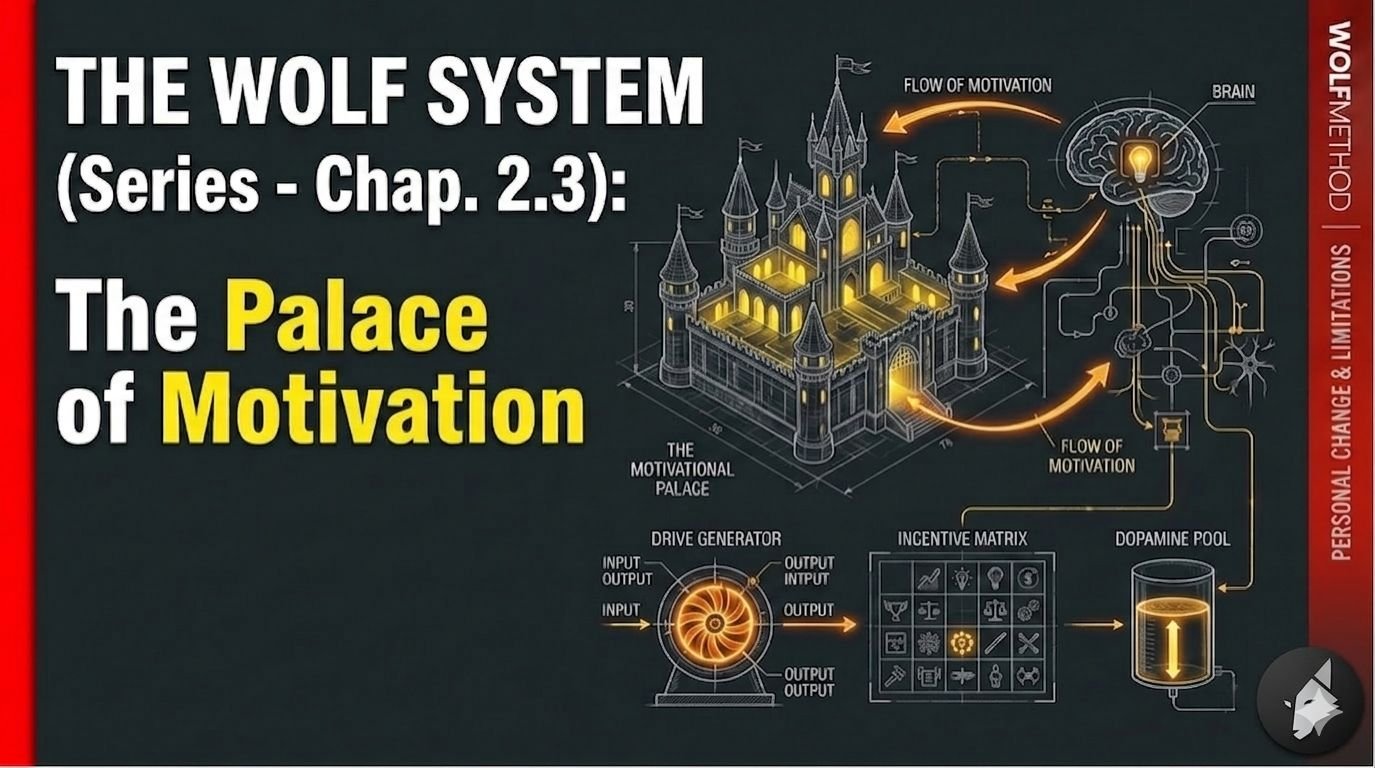
The answer lies in what we can call your Motivation Palace.
Motivation Isn’t Something You “Have”
Most people believe motivation is something that comes and goes.
“I just don’t feel motivated today.”
But the truth is more technical.
Your system is never unmotivated.
It is always motivated toward the most energy-efficient option available.
When you say you “lack motivation”, what is actually happening is this:
Your system is currently motivated to save energy rather than spend it.
The real challenge therefore is not “finding” motivation.
It is generating it deliberately.
Your Mind Is an Archive
Your brain stores thousands of feedback loops from past experiences.
Think of this archive as a personal cinema inside your mind.
Inside this cinema, there are two main sections.
The Illuminated Rooms
These rooms contain recordings of your greatest hits.
Moments when an action produced:
- Victory
- Joy
- Pride
- Achievement
- Growth
The emotional soundtrack in these rooms is made of:
Courage, gratitude, pride, and vitality.
When these films play, your body immediately feels stronger.
The Dark Basements
These rooms store recordings of your most painful experiences.
Moments involving:
- Failure
- Loss
- Regret
- Shame
- Missed opportunities
The emotional soundtrack here is composed of:
Anguish, frustration, and self-rejection.
These films can generate powerful emotional reactions just as quickly.
Imagination Is the Remote Control
Motivation is created when you use imagination to play one of these stored films.
Your imagination acts like a remote control for the archive.
When you select a memory and replay it vividly, the emotional soundtrack activates immediately.
Your body doesn’t distinguish much between remembered emotion and present emotion.
The result?
Emotion appears instantly.
And emotion is motivation.
A Practical Example: The Gym Film
Imagine you arrive home tired after work.
You’re considering whether to go to the gym.
The Default State
Your system automatically plays a film from the Dark Basement.
The film is called:
“Tiredness and Discomfort.”
The emotional soundtrack is:
Apathy.
Your body now wants the easiest option.
The sofa.
The Intervention (The Designer)
You recognise the film that’s playing.
You pause it.
Instead of letting your system run on autopilot, you consciously choose another recording.
Selecting the Reinforcement Loop
You don’t choose the film “Going to the Gym.”
That film might still feel exhausting.
Instead, you choose a different film:
“The Post-Workout Feeling.”
You vividly replay the moment you left the gym feeling:
- Energised
- Proud
- Alive
- Mentally clear
Driven Action
Now the emotional soundtrack changes.
Your system begins pursuing the reward.
You no longer go to the gym to suffer through effort.
You go to the gym to recreate the emotional state you just projected in your mind.
Motivation has been manufactured.
Questions for Reflection: Know Your Archive
To become an expert on your own system, you must understand your personal archive.
Take a moment to reflect on these questions.
1. Your Courage Film
If you needed an instant surge of courage right now, which film from your Illuminated Room would you project?
Describe:
- The scene
- The action you took
- The exact emotion you felt
2. Your Aversion Film
If you wanted to eliminate a destructive habit, which “horror film” from your Dark Basement could you project?
Think of a memory involving:
- Shame
- Loss
- Regret
- Consequences
That memory can become a powerful aversion trigger.
3. Creating Your Archive
What practical step could you take today to catalogue your strongest memories?
For example:
Start a Victory Diary.
Record moments where you experienced:
- Progress
- Pride
- Personal breakthroughs
Over time, this becomes a curated library of motivational films you can access on demand.
Final Thought
Motivation isn’t random.
It isn’t something the world gives you.
It is something you manufacture by selecting which emotional films your system plays.
Master the archive.
Control the soundtrack.
And you control the direction of your actions.
Coming Next
In the next post, we’ll examine the rapid response systems that can throw our course off balance.
We’ll explore System Autopilots and how to distinguish between what:
- “suits me now”
- and what “serves me long-term.”
Understanding this distinction is essential for staying aligned with your deeper goals.