In Post 3, we explored how the loop of reinforcing action adding small “sticks” each day gradually builds your internal bonfire of capability.
But this leads to an uncomfortable question:
If the process is so simple, why do most people quit?
Why does their fire die out before it ever becomes something powerful?
Because while you’re focused on lighting the fire, there is an invisible force quietly and consistently working against you.. that force is Limbic Friction.
The Invisible Force: The Energy Balance Loop
To be seen, the obvious must be felt. Have you ever run until you were tired? Feeling tired is the signal from your “system” reporting a high energy expenditure.
The vast majority of people look for inspiration to fulfil their dreams. Finding inspiration is easy. So why do most people start but give up?
Because they face a powerful balance feedback loop.
Your brain is programmed to conserve energy. When you try something new, it sets off an alarm: wasting energy hurts, it tires you out, your brain won’t let you.
This resistance is not your fault. It’s the function of the “system” to keep it in balance.
The solution, therefore, is not to fight this force with more inspiration, but to understand it and use other mechanisms in your own “system” to circumvent it.
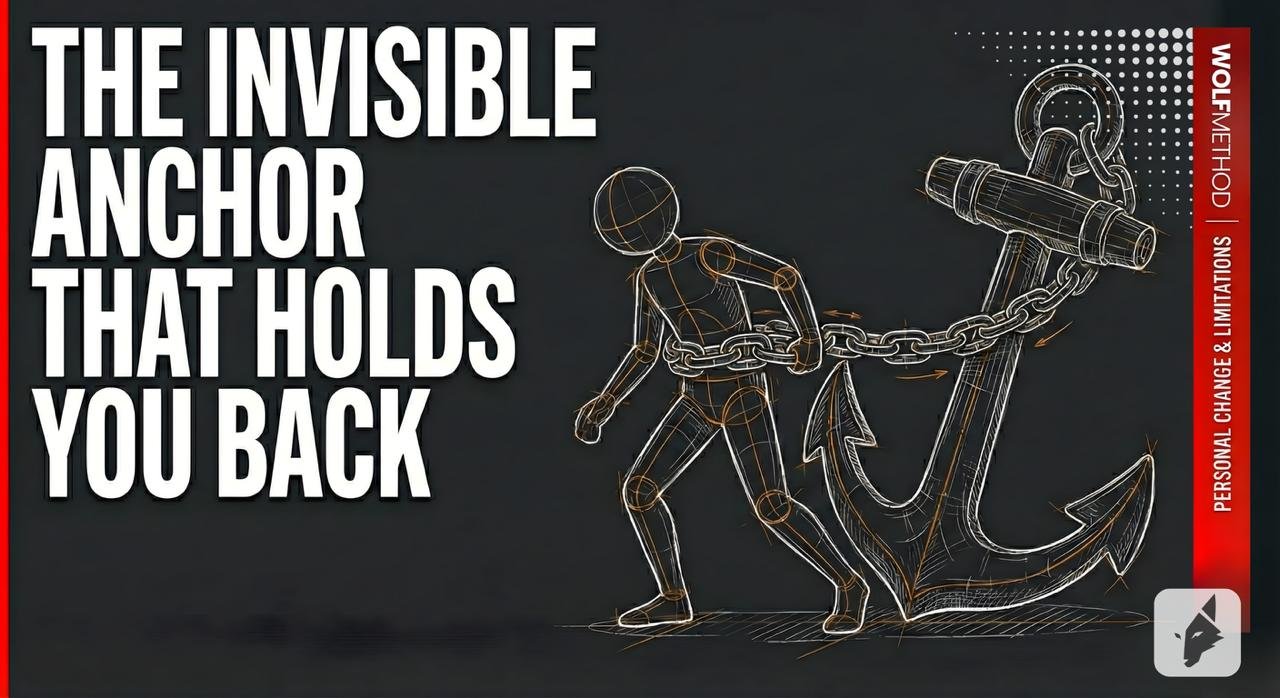
The Anchor Analogy
Imagine that your life is a ship and your current state (with your habits and routines) is a safe harbour.
Your brain, preoccupied with saving fuel (energy), keeps the ship secured by an invisible and powerful anchor: the instinct for self-preservation.
Inspiration and motivation are like a strong gust of wind. They fill the sails, make the ship rock and give the illusion of movement. But at the end of the day, when the wind dies down, you realise that you haven’t moved.
Why is that? Because, no matter how strong the wind, a ship won’t go anywhere as long as its anchor is stuck to the seabed.
Let’s compare two approaches to the goal of “starting your own business while holding down a job”:
1. The Inspiration Approach (Fighting the Anchor)
You attend a lecture (the gust of wind) and decide that you’re going to use all your evenings to build your business.
The first night, you work for four hours, fuelled by adrenaline. The ship stretches the anchor chain to the maximum.
You feel extremely tired. On the third night, the wind dies down. The anchor pulls the ship back into harbour and you switch on the TV, exhausted.
2. The “System” Approach (Gathering the Anchor)
You know that the energy conservation anchor is real. Instead of looking for wind, you focus on building a mechanism to pick up the anchor little by little.
The biological secret to this is habit, because habits are actions that become automatic and therefore use very little energy.
First Chain Link: Instead of 4 hours, you commit to working on your business for just 15 minutes every evening. It’s such a small movement that the anchor alarm doesn’t even go off.
Build the Mechanism: By repeating this minimal action, your brain begins to automate the process. The effort to get started decreases.
Suspended Anchor: After a few weeks, these 15 minutes become a habit. The anchor no longer offers any resistance to this task. Now, with the ship free, it’s much easier to take advantage of any “wind” of inspiration to go further.
Questions for reflection (Diagnosis of your Anchor)
Start identifying your own resistance. Leave your thoughts in the comments:
Think of an important goal for you. What specific “alarms” (sensations, thoughts, excuses) does your “system” set off when you try to expend energy on it?
If the brute force of inspiration doesn’t work against your “anchor”, what would be the first and smallest “link in the chain” that you could start picking up consistently and almost effortlessly?
How can this idea of the “biological anchor” explain why radical diets (large energy expenditure) tend to fail, while small, sustained nutritional changes (habit-building) are usually more successful?
Now that we know the two main forces – the Bonfire of Reinforcement (‘post’ 3) and the Anchor of Balance (‘post’ 4) – we’re ready for the next phase.
In the next chapter, we’ll learn how to use one loop to beat the other. We’ll talk about the leverage point: how to use action to reprogramme your “autopilot”.
To receive the next chapter in this series directly in your e-mail, subscribe to the newsletter below.