We begin with the fundamental question that haunts most people who seek change.
“Why do we manage it sometimes, and other times, not?”
We have all wanted to change something in our life and failed.
We have had brilliant ideas to achieve our dreams, we have lived moments of inspiration and excitement, but inevitably, the energy fades.
This question reveals a flaw in our mental model.
We search for a linear cause and a single enemy (“lack of motivation,” “laziness”), when the answer lies in the dynamics of a system.
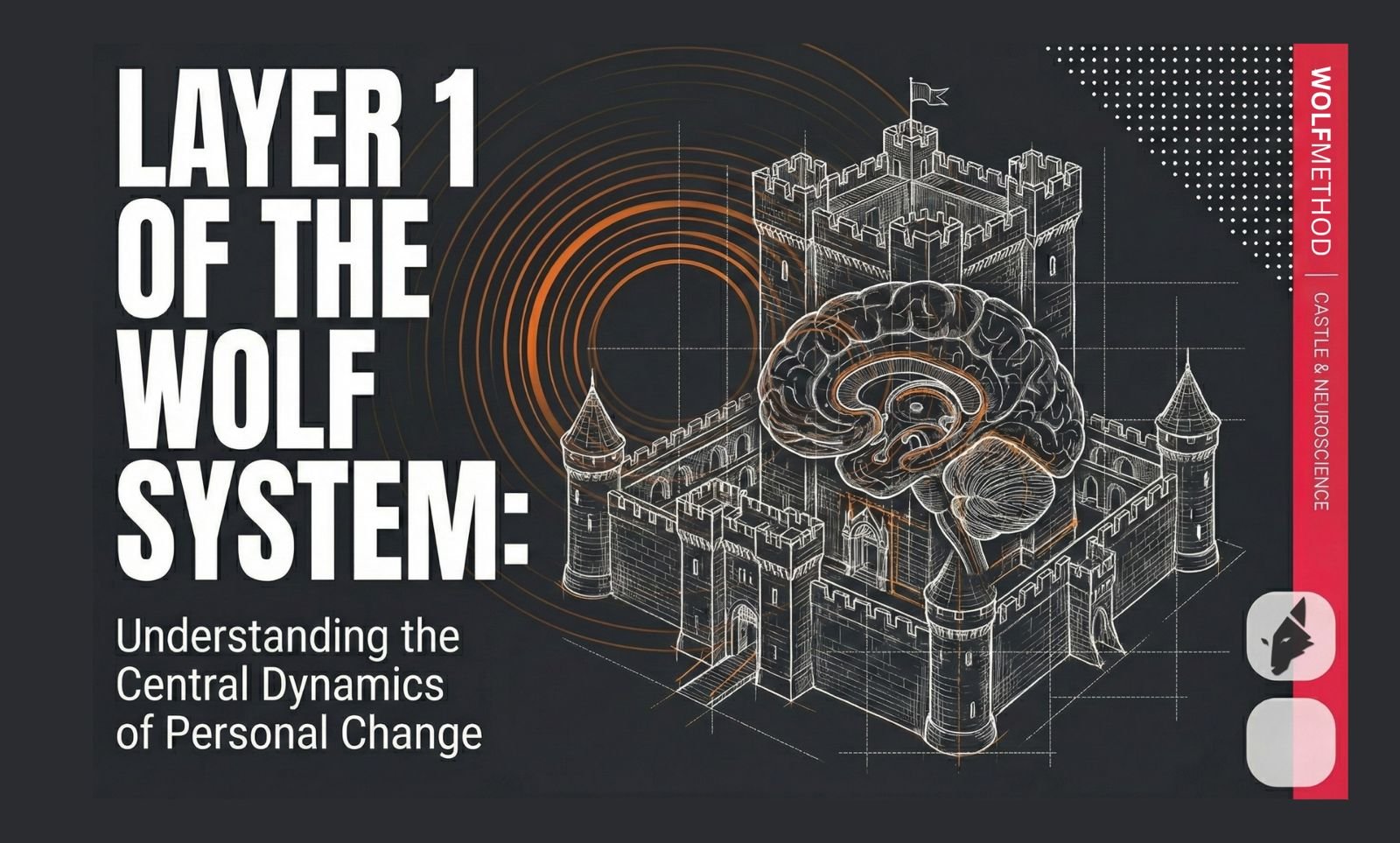
To understand your life, first understand the cycle that governs it: the action of “Facing a challenge” is a flow that feeds your stock of “Capacity for Achievement.”
The secret is not to fight the wrong enemies, but to manage this virtuous cycle that reinforces itself at every step.
The Campfire Analogy
Think of your Capacity for Achievement as a campfire.
At the beginning, you only have weak embers.
- The initial inspiration is like lighter fluid: a big flame that burns fast and disappears, leaving the embers unchanged.
- The action of Facing a Challenge is like adding a small twig or a log to the fire.
The secret is not to seek more lighter fluid (external motivation), but to learn the art of adding wood consistently, transforming fragile embers into a stable, powerful fire.
Two Approaches to Habit Formation
1. The “Single Enemy” Approach (Fighting the Fire)
You fill yourself with inspiration (lighter fluid), buy new clothes, pay for an expensive gym membership, and go on the first day for two hours.
This is like throwing a huge, damp log onto a tiny ember.
The next day, you are sore, tired, and the fire has almost gone out.
The desire to quit is immense.
2. The “Manage the Cycle” Approach (Tending the Fire)
You focus on managing the reinforcement loop.
Action (Flow):
You add a tiny twig.
Instead of going to the gym, you put on your trainers and walk for 10 minutes around the block.
It’s almost impossible to fail.
Result (Feeds the Stock):
You finish feeling good.
“I did it.”
Your fire grows.
The ember becomes stronger.
Reinforcement Cycle:
The next day, adding another 10-minute walk feels easier.
Your fire is already hotter.
Each successful action makes the next easier—not by magic, but because you build a stock of capacity that produces its own energy and momentum.
Eventually, your fire becomes strong enough that a rainy day (lack of will) or a damp log (a harder workout) won’t extinguish it.
Instead, the fire is strong enough to consume those challenges and grow even larger.
Reflection Questions (Your Personal Laboratory)
As system architects, we do not just read we test.
Leave your reflection in the comments.
- What is the smallest twig you could add to your fire today an action so small it’s almost impossible not to do?
- How does thinking in terms of building a stock (the fire) instead of finding a cause (lighter fluid) change the way you face low-motivation days?
- How does the reinforcement cycle explain why communities or groups, where people “warm each other’s fires,” are so effective for habit change?
What Comes Next
In the next chapter, we will analyse the force that most extinguishes your fire: the invisible force that pulls you back to the couch.
We will explore the energy balance loop.
To receive every chapter directly by email, subscribe to the newsletter below.